Vibe Coding: Building Software with AI
What I have learned shipping real apps with tools like Claude, ChatGPT, Cursor and Codex: choosing tools, a working method, design consistency and the road to the store.
49 posts
Kalecik making-of
- Building a Mobile Game with AI Agents: KalecikFrom an empty folder to an iPhone: how I made Kalecik by directing five parallel Claude Code sessions, what I decided myself, and where we hit walls.
- Procedural Stone Walls, Gates and Bridges in GodotHow a finger stroke in Kalecik becomes a stone wall, an arched gate, a bridge or a house: smoothing, seeded masonry and chunked meshes in Godot 4.
- Royalty-Free Game Music: Generating Every Sound in CodeKalecik uses no recordings: stones, birds, sheep and 37 music pieces were all generated in Python. No loops, a music watchdog, and LUFS instead of ears.
- The Game That Heated My iPhone: Godot Mobile PerformanceMy Godot game made an iPhone 15 Pro Max hot. The root cause was 120 fps; the fixes were a frame-rate governor, shadow proxies, grass chunks and threads.
- Automating App Store Connect Release Prep with the APIHow Kalecik's App Store prep runs on the API: a JWT, a price schedule, listings in 50 locales, engine-rendered screenshots and a one-command upload.
BOINGWARD making-of
- A 3D Game in One Day: Building BOINGWARD with AI AgentsI started from a Unity design pack and switched to Godot the same morning. Parallel Claude Code sessions produced 148 commits and a playable 3D pogo game.
- Pogo Stick Physics in Godot: A Character That Bounces ItselfBOINGWARD's pogo physics: auto-bounce with RigidBody3D, the launch formula, taming a snowballing speed, and a test that matches at 30, 60 and 144 fps.
- Level Design from Measured Metrics, Checked by a BotIn BOINGWARD, courses are generated from measured bounce values and a bot tries every jump with the real physics. The medal times come from that same bot's run.
- Risk and Reward: Designing Air Tricks for a Pogo GameFrom a one-sentence wish to a system defined by numbers: how air tricks in BOINGWARD became an optional, risky reward that does not depend on frame rate.
- Cheat Checks on Mobile: Server-Authoritative Racing in GodotBOINGWARD's 8-player race server: why WebSocket, how movement is validated, and why honest bots were flagged as cheaters in a test over a phone's mobile data.
More posts
When Is Gemini 4 Carbon Coming? Who Can Use It?
Right now only selected cyber defenders can use Gemini 4 Carbon. It is not in the Gemini app, the API or Antigravity, and Google has given no date.
What Is Gemini 4 Carbon? Cybersecurity, Price, Access
Google announced Gemini 4 Carbon on Oct 28: #1 on Artificial Analysis at 59, same price as Argon. For now it is open only to selected cyber defenders.
Gemini 4 Carbon vs Argon vs Claude Opus 5.5 vs GPT-6 Astra
Gemini 4 Carbon is first on the index but not everywhere: Opus 5.5 leads agentic coding, Astra leads FrontierSWE, and its error rate is higher than Argon's.
Whistle and Phonon 2: The Smallest Speech-to-Text Models
Whistle is 16.9 MB and runs on a CPU in seven languages; Phonon 2 transcribes an hour of audio in about 20 seconds on a MacBook Air. Setup and comparison.
What Is OpenAI Dots? Open-Source Open Dots Alternatives
OpenAI Dots is a persistent agent with its own computer that keeps working when you are away. Who gets it, its safety controls, open-source Open Dots options.
What Is Claude Sonnet 5.5? Benchmarks, Cost, Free Plan
Claude Sonnet 5.5 is now the free plan's default model. It scores 70.6% on Terminal-Bench 4.0 at $2 / $10 per million tokens. How it compares.

Weekly AI News: Science, Robots and Open Models
AI found counterexamples in plasma physics and cracked Napoleon's 217-year-old coded letter. A robot played badminton, and new open models arrived.
What Is GPT-6.1 Sol? Price, Performance, Who Can Use It
GPT-6.1 Sol offers near-Astra intelligence at a fifth of the price: $2 / $10. New plan tiers, Ultrafast speed and who can use it, explained.
What Is Hermes Agent? How to Install (Mac, Linux, Windows)
Hermes Agent is Nous Research's open-source terminal agent with memory and skills. One-line install, first setup and model choice, step by step.
What Is Gemini 4 Pro (Argon)? Features, Price, Benchmarks
Google announced Gemini 4 Argon on Sept 30: 1M output tokens, $2/$10 intro pricing, 77.9% on DeepSWE. Open to Pro and Ultra in the Gemini app and Antigravity.
How to Install Gemini 4 Pro Argon? Who Can Use It?
Gemini 4 Argon is open to Pro and Ultra subscribers in the Gemini app and in Antigravity. On Pro, Argon has its own weekly-only quota. Nothing to install.
Hermes Agent: Telegram, Scheduled Tasks and Security
Connect Hermes Agent to Telegram, automate it with cron and run it safely: BotFather, allowlists, approval modes and Docker isolation.
Gemini 4 Argon vs Claude Opus 5.5 vs GPT-6 Astra
Gemini 4 Argon leads on legal, finance and long software tasks but trails on terminal and science tasks. Three models compared with a benchmark table.
Space Bunny Alpha vs Other AI Agents
Space Bunny Alpha compared with Claude, GPT, Gemini and free open models: price, the 1M context window, multimodal input and agent capabilities.
Space Bunny Alpha: 1M Context and Multimodal Input
What a one-million-token context window really holds, how image and video input share that budget, and how to measure and manage your token budget.
LongCat 2.5 Preview and Competing AI Models
Meituan's LongCat-2.5-Preview against its rivals: published benchmark scores, price, context, thinking mode and the transparency angle.
How to Install Space Bunny Alpha: Step by Step
Setting up Space Bunny Alpha via OpenRouter: the API key, the first request, Python and TypeScript samples, image input, open-source agents.

How to Install LongCat 2.5 Preview: News and Guide
Meituan's LongCat-2.5-Preview is out: 1M context, image input, optional thinking mode and $0.006 cached input. Here is the step-by-step setup.
Building an AI Agent With Space Bunny Alpha
From tool schema to loop: writing a working coding agent on Space Bunny Alpha, feeding tool errors back to the model and locking the output to JSON.
What Is JEV? The Reflex Layer of AI (TypeSafe's System One Model)
JEV is not a chat model; it is a model that decides. The System One idea, the three question types, pricing and limits, starting from your first call.
The Real Cost of Building 5 Apps with Vibe Coding: 3 Months, $60
LevelUpStudy, Recapday, MimBop, Talkamble and Golden Pixel. Model subscription, store fees, the hidden line items, and what actually turns out expensive.
Running a Trilingual Blog Without Breaking hreflang
Nearly 400 posts in three languages: how I stopped hreflang from silently disappearing, killed CLS and fixed an icon font cached for a year, with code.
JEV Use Cases: 10 Real Scenarios and What They Cost
From comment moderation to agent tool selection, model routing and RAG filtering: ten scenarios where JEV earns its place, with code and cost comparisons.
JEV Question Types: Using Choice, Score and Noul Properly
The three JEV question types, the rules for writing criteria, the difference between probability and confidence, and why dozens of questions belong in one call.
Coding with Free AI: opencode and the Cheap Model Stack
Plugging your own key into open-source opencode and running free or near-free models: setup, provider config, and what free actually costs you.

Wiring JEV Into Your System: Harness, Cost and Known Limits
On its own JEV produces a cloud of probabilities. How to build the harness that turns it into action, which patterns to use, and where the model is weak.
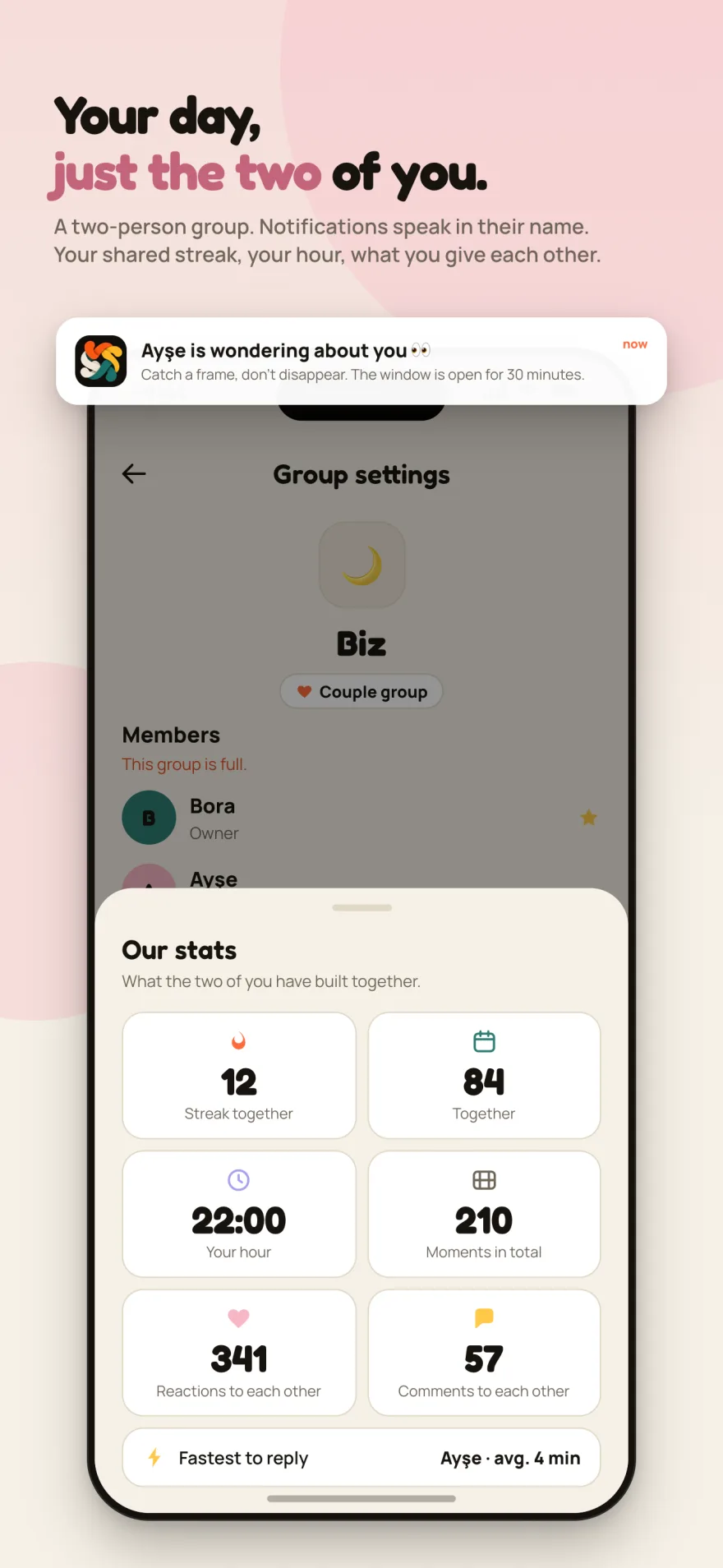
Recapday Couple Mode: Why a Two-Person Group Needed Its Own Mode
How Couple Mode found its way into Recapday: what changes at two people, why a mode beat a separate app, and what I deliberately left out.
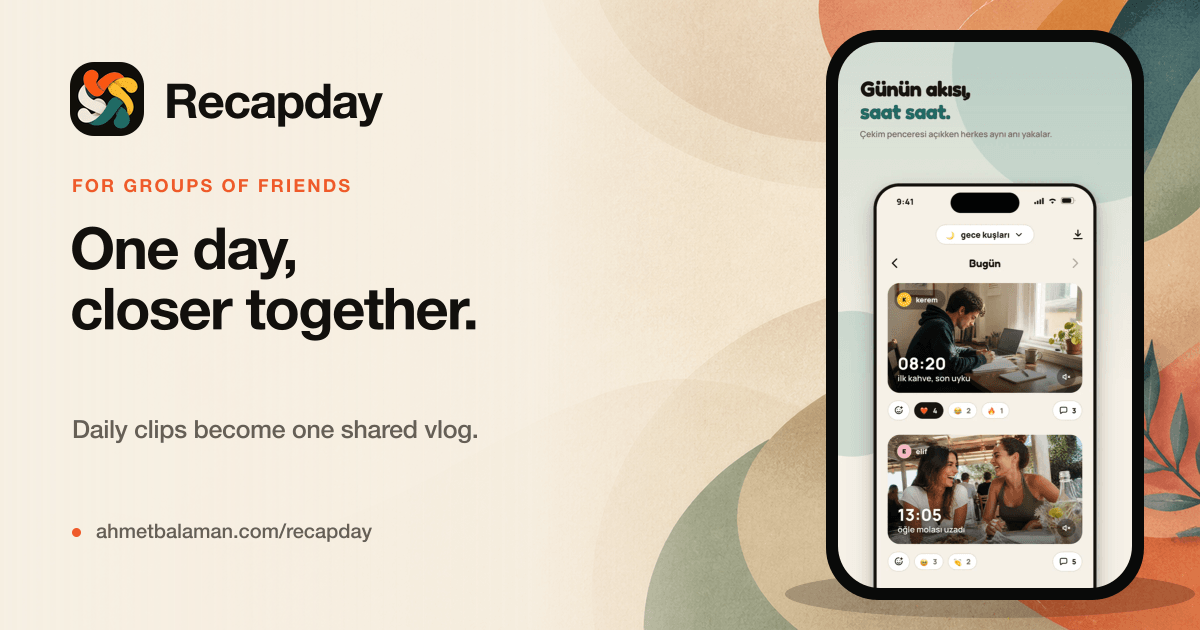
How I Built Recapday: A Decision Log From Idea to Store
The architecture behind Recapday: why identity lives in Firebase but data on my own server, why I deleted the social features, and what was irreversible.
What Is Claude Design? Seven Levels of AI Design
Most people stop at level one of Claude Design and get generic work. Here are the seven levels, the costly mistake at each, and how to move up.
What Is a Harness? The Difference Between the Model and the Coding Tool (with DeepSeek)
Why does the same model give different results in different tools? Harness, agent loop and context management explained with DeepSeek.
What Is an Agent Skill? How to Write Skills That Work
Most agent skills do nothing. Here are the patterns that actually help, the rules for writing one, and the security check to run before you install.

What Is AI Slop? Building a Website That Doesn’t Look AI-Generated
Why does every AI-built website look the same? Here are the symptoms of AI slop and the concrete ways to break it in typography and copy.
Website Design Audit: Comparing Against a Reference
Can’t explain why your website falls short? Compare it with a strong reference and turn vague impressions into a concrete design audit.
AI Motion Graphics: Data, Icons and Automation
Why does AI-generated animation always look the same? Turning real data into motion, using ready-made assets, and pulling graphics out of video.
Consistency in AI Design: The Critic Loop
AI design comes out inconsistent because the model grades its own homework. Here is how an independent critic loop fixes it, and what it costs.

What Is Vibe Coding? A Realistic Beginner's Guide
What is vibe coding, how does it work, which tools do you need? A beginner's guide to AI-assisted development with Claude, ChatGPT, Cursor and Codex.
Vibe Coding Tools Compared: When to Use Claude, ChatGPT, Cursor, and Codex
A hands-on comparison of Claude, ChatGPT, Cursor, Codex and GitHub Copilot from real projects: strengths, weaknesses and when to use each one.
The Vibe Coding Method: 7 Practical Tips and the Art of Writing Prompts
Seven tips that actually work in vibe coding: writing prompts, a decision document, small tasks, tests, auditing and refactoring.
Shipping an App Store App with Full Vibe Coding: The LevelUpStudy Story
Can you ship an App Store app by coding with AI? The method that worked while building LevelUpStudy, the three real walls I hit, and the lessons.